For many Primary 6 students, preparing for the PSLE English Oral Examination can quickly become an exercise in collecting model answers.
Practise enough passages.
Memorise useful vocabulary.
Prepare answers for common topics.
Learn impressive phrases.
Hopefully, when examination day arrives, something familiar appears.
There is certainly value in preparation.
But there is one problem:
An oral examination is ultimately communication — and communication cannot be completely scripted in advance.
The examiner can phrase a question differently from what your child expected. A follow-up question may take the conversation somewhere unexpected. Your child may understand the topic perfectly well but suddenly need a few seconds to organise an answer.
This is why Darren Tay, Founder of Public Speaking Academy and the 2016 World Champion of Public Speaking, does not encourage children to memorise entire model answers.
His approach is instead:
“Prepare the tools rather than the final script.” — Darren Tay
The objective is not merely to help a child sound impressive when the anticipated question appears.
It is to help the child listen, think and communicate when the actual question arrives.
What Is the PSLE English Oral Format in 2026?
According to the official 2026 examination syllabus published by the Singapore Examinations and Assessment Board (SEAB), Oral Communication is Paper 4 of the PSLE English Language examination.
It carries 40 marks and accounts for 20% of the overall English examination.
There are two components:
Reading Aloud — 15 marks
Stimulus-Based Conversation — 25 marks
Candidates receive 5 minutes of preparation time, followed by approximately 5 minutes of examination time.
SEAB describes the Stimulus-Based Conversation component as using one photo stimulus.
More importantly, SEAB clarified in August 2026 that the oral examination assesses students' ability to communicate effectively, including expressing ideas and engaging in conversation using appropriate vocabulary, sentence structures and pronunciation.
Students are not expected to reproduce particular technical vocabulary or pre-prepared responses.
That distinction matters.
Because preparing your child for PSLE Oral should not simply mean teaching them what to say.
It should also mean teaching them how to think about what to say.
PSLE Oral Is Not Just About Pronouncing Every Word Correctly
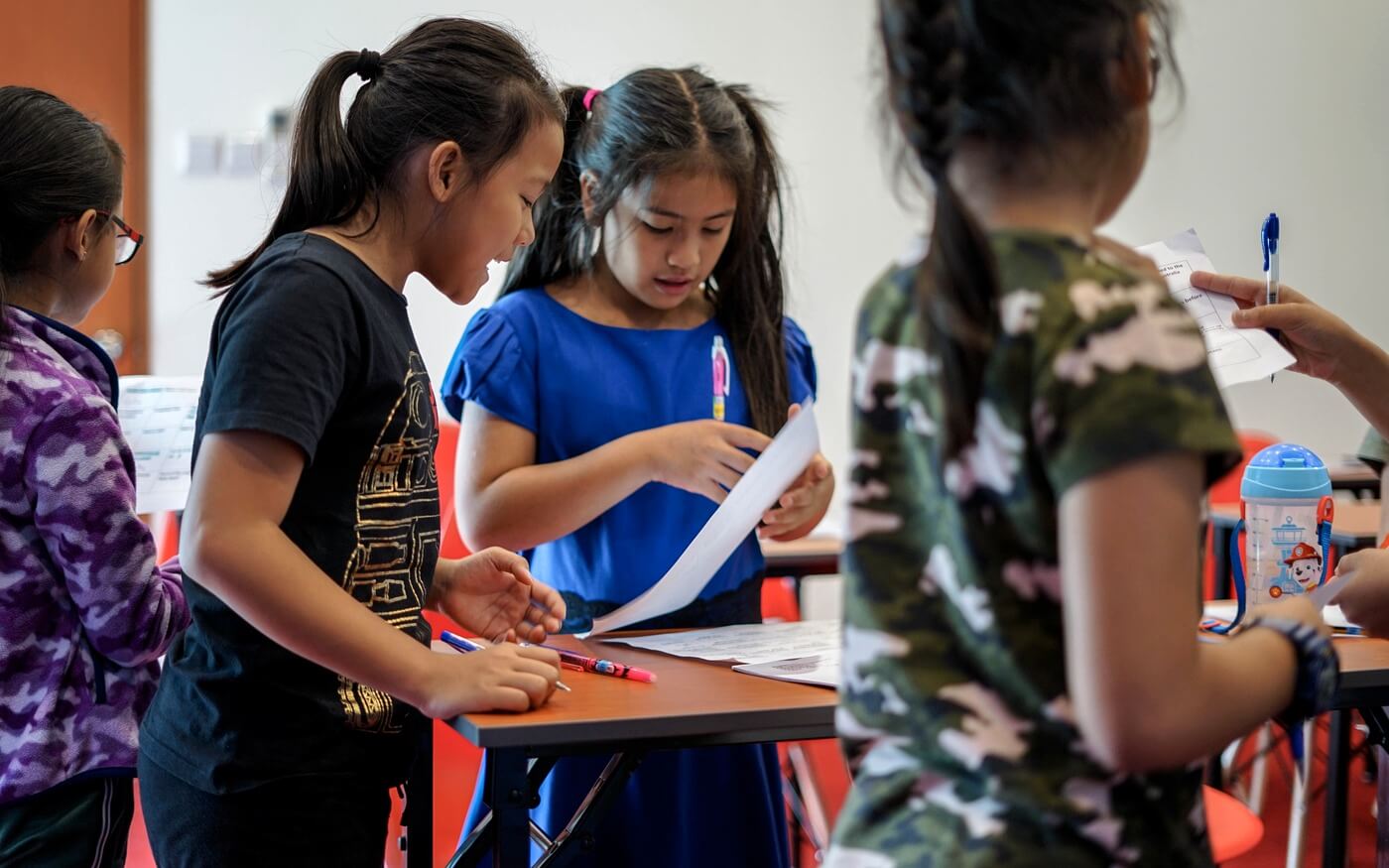
When Darren listens to a Primary 6 student practising Reading Aloud, he is not simply counting pronunciation mistakes.
He asks a more fundamental question:
Does the child understand what he or she is saying — and is that meaning being communicated to the listener?
A child can pronounce every word correctly and still sound as though the objective is simply to reach the full stop at the bottom of the passage.
For Reading Aloud, Darren listens for several things:
Is the pace comfortable?
Are words articulated clearly?
Do pauses occur naturally according to punctuation and meaning?
Does the child place emphasis appropriately?
Does the voice vary naturally, rather than remaining flat throughout?
Does the reading sound like meaningful communication?
The distinction is subtle but important.
Reading accurately is not necessarily the same as reading communicatively.
Don't Confuse Fast Reading With Fluent Reading
One mistake Darren regularly observes is children rushing.
Some children associate fluency with speed:
If I can read this quickly without stopping, I must be a fluent reader.
But faster is not automatically better.
Darren explains:
“I would rather have a child read slightly more slowly and communicate clearly than race through a passage and lose the meaning.”
And simply telling a child to “Slow down!” may not be enough.
During training, Darren may stop the student at an appropriate point, demonstrate the same sentence at a more comfortable pace, and then ask the student to repeat it immediately.
If a child pauses unnaturally, he may read the sentence both ways so that the child can hear the difference.
If the delivery sounds monotonous, he may identify a particular word or phrase and demonstrate how changing the stress alters the meaning of the sentence.
The process is therefore not simply:
Trainer identifies mistake → Trainer tells child mistake.
It is closer to:
Hear the difference → See the demonstration → Try it immediately → Receive feedback → Try again.
This reflects the emphasis on hands-on practice and feedback that parents should also look for when choosing a public speaking class for their child.
How Does the PAGE Framework Apply to Reading Aloud?
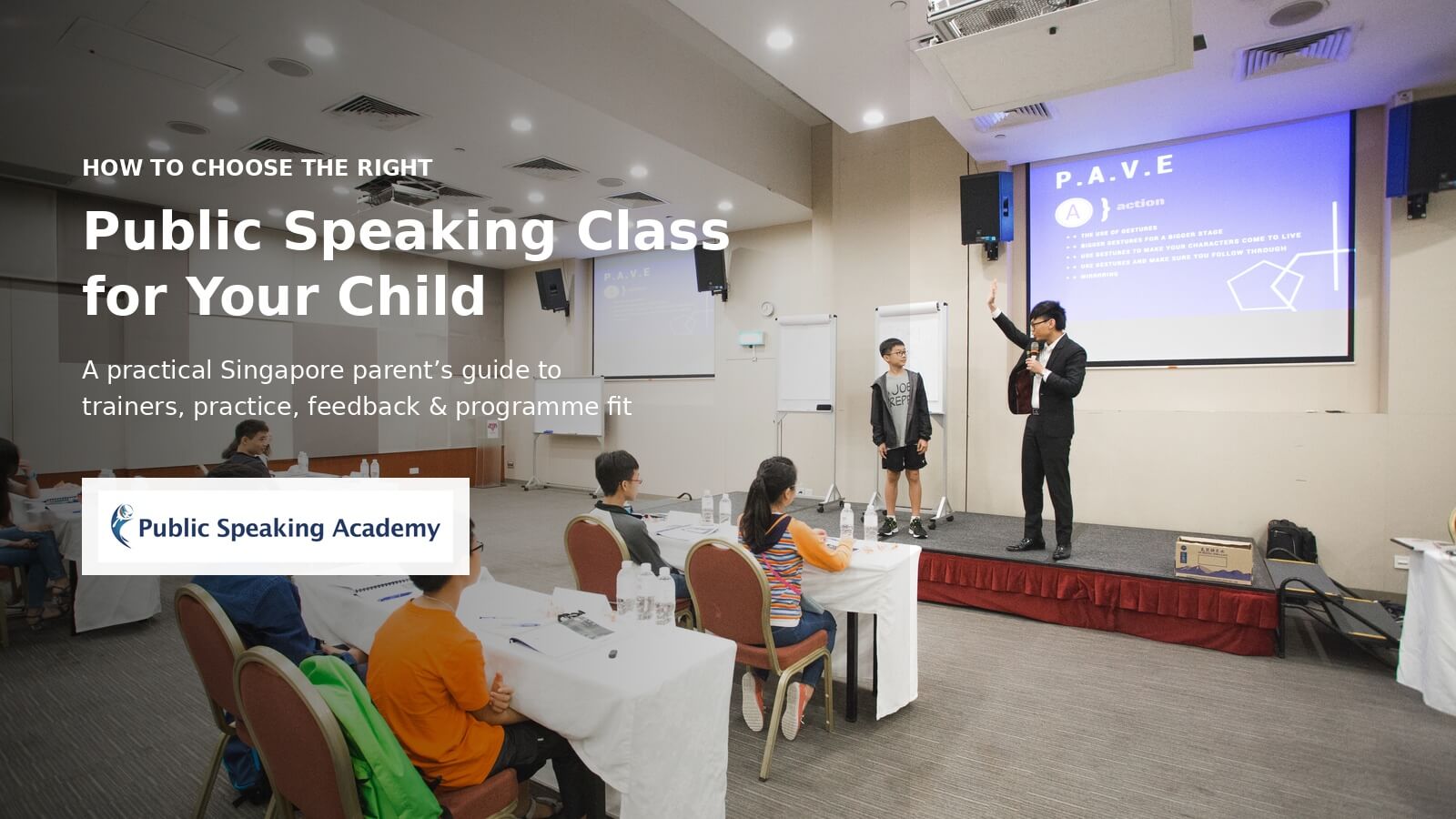
One framework Darren uses when coaching students is PAGE:
P — Posture
A — Audio
G — Gestures
E — Expressiveness
However, a useful framework should be adapted to the situation rather than applied mechanically.
For PSLE Reading Aloud:
Posture matters because sitting upright provides an appropriate physical foundation for communication.
Audio is especially important: the student should project sufficiently, articulate words clearly and maintain an appropriate pace.
Expressiveness reminds the child that reading aloud is still communication. Meaning, emphasis and vocal variation matter.
Gestures, however, are naturally less important in this particular context.
The objective is not to turn Reading Aloud into a dramatic public-speaking performance.
It is to communicate the passage clearly and meaningfully.
Stimulus-Based Conversation: The First Answer Is Often Just the Beginning
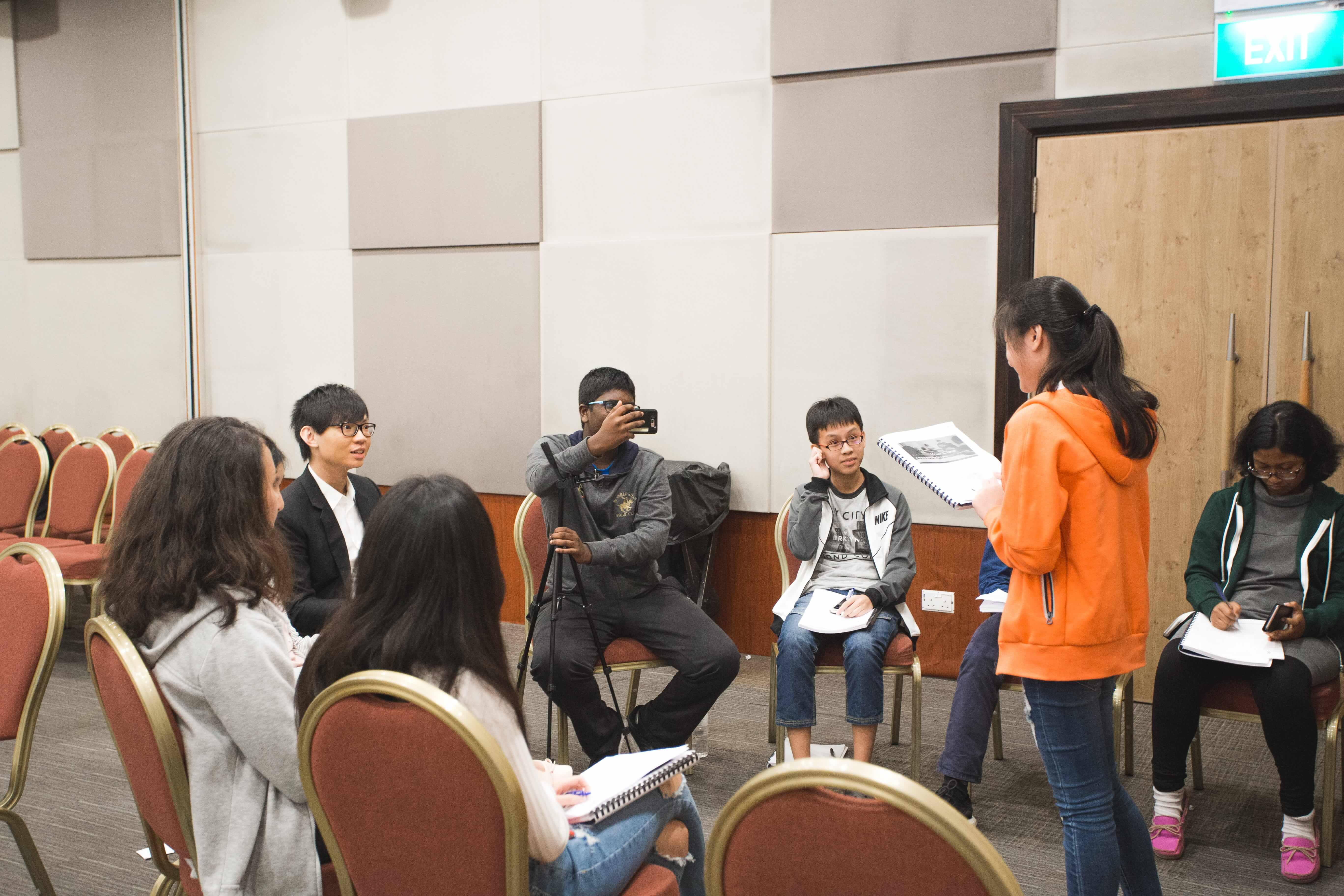
Now imagine an examiner asks a child about recycling.
The child responds:
“Yes, I think recycling is important because it helps the environment.”
Is that relevant?
Yes.
Does it express an opinion?
Yes.
But Darren would usually see that sentence as the beginning of the answer rather than the end.
Instead of supplying the child with a more sophisticated paragraph to memorise, he might ask:
“What do you recycle at home?”
Then:
“Why does that matter?”
Or:
“What do you think would happen if people did not recycle?”
Suddenly the child remembers separating plastic bottles from general waste at home.
Now there is something concrete to discuss.
The original idea hasn't been replaced.
It has been developed.
Over time, Darren wants students to become comfortable doing this independently:
Start with a relevant idea → Explain what you mean → Support it with something specific → Think beyond the immediate answer
The important point is that the thinking still belongs to the child.
A Real Example: When “Lack of Confidence” Wasn't Actually the Main Problem
This is also why diagnosing the actual speaking difficulty matters.
Darren recalls working with a Primary 6 student whose parent initially described the child as lacking confidence.
The evidence seemed understandable.
The child gave very short answers and sometimes appeared hesitant.
But after working with the student, Darren noticed something different.
The child was actually quite comfortable discussing familiar subjects.
The problem was that the student had developed the habit of stopping as soon as the basic question had technically been answered.
Ask whether the child enjoyed an activity and the response might be:
“Yes, because it is fun.”
And... finished. 😂
Instead of concentrating only on confidence-building exercises, Darren began teaching the child to recognise that:
“The first sentence is often just the beginning of the response.”
He would follow up:
What happened?
Can you give me a specific experience?
Why did that experience matter to you?
As the student became more accustomed to developing ideas, the responses naturally became longer and more conversational.
This illustrates something we have discussed elsewhere at PSA:
What looks like a confidence problem may actually be a thinking or communication habit that can be trained.
The same principle applies when a child freezes after being unexpectedly asked to speak.
Before trying to solve the problem, first understand why it is happening.
Should Children Memorise Model Answers for PSLE Oral?
Darren does not encourage children to memorise entire answers.
Not because preparation is unnecessary.
Quite the opposite.
Preparation matters enormously.
But prepare the tools, rather than the final script.
Why?
Because conversations are unpredictable.
An examiner can:
phrase a question differently;
ask an unexpected follow-up;
emphasise a different aspect of the topic;
take the discussion somewhere the child had not anticipated.
An overly memorised student can consequently fall into a subtle trap.
Instead of listening carefully to the question, the child starts listening for an opportunity to deliver the prepared answer.
The answer might sound beautifully polished...
...while not quite answering what was asked.
Darren puts it this way:
“The objective is to enter the examination prepared to think and communicate, rather than prepared to recite.”
So What SHOULD a Child Prepare for PSLE Oral?
Not memorising complete scripts does not mean walking into the examination unprepared.
There is plenty a child can build beforehand.
For example:
Ways of developing an answer
A child can practise taking an initial opinion and explaining the reasoning behind it.
A bank of genuine experiences
School activities, family experiences, friendships, hobbies, mistakes, achievements and ordinary everyday encounters can become useful material when relevant.
Experience discussing different themes
The objective is not to predict the exact examination question. It is to become comfortable thinking and talking about different issues.
Vocabulary
A broader vocabulary gives the child more options for expressing an idea accurately — but words should still be chosen naturally according to the question.
Comfort with unexpected questions
Children can deliberately practise questions they have not prepared beforehand.
This is closely related to the broader principle we use when developing children's independent public-speaking and communication skills:
Being able to deliver prepared material is useful.
Being able to generate, organise and communicate your own ideas is another skill altogether.
What If My Child's Mind Goes Blank During PSLE Oral?
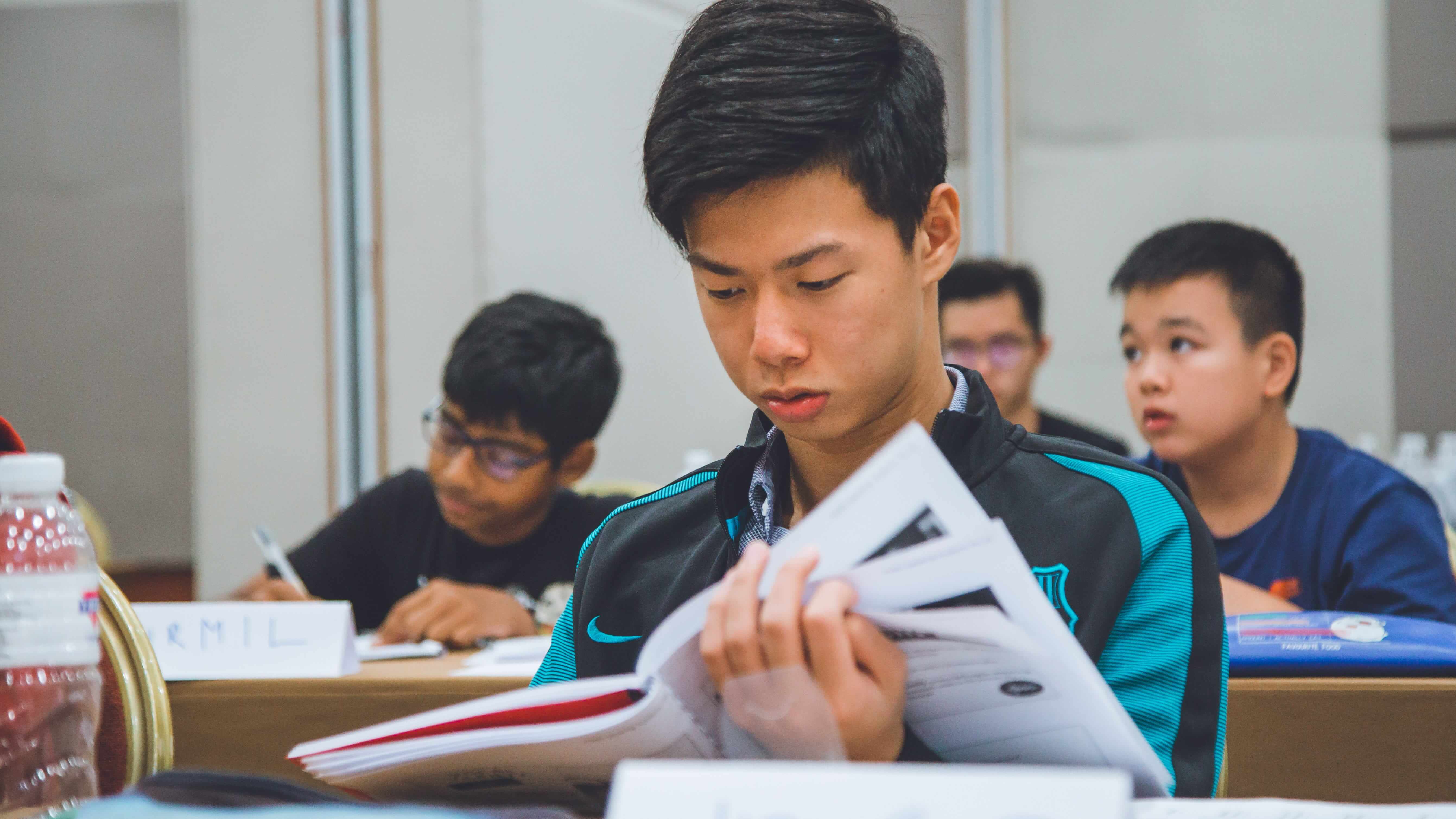
First:
A short pause is okay.
Some children believe they must begin answering immediately.
The question ends.
One second passes.
And internally:
“OH NO I'M NOT TALKING.” 😂
That pressure can make thinking even harder.
Darren instead trains students to give themselves a moment to process the question.
Then:
Start with the simplest relevant idea you can access.
If the topic is familiar, mentally search your own experiences.
Ask yourself:
Have I seen something like this?
Have I done this before?
Has something similar happened to me?
Once the child retrieves one concrete experience, there is often something tangible from which the answer can grow.
A useful way of understanding the process is:
Pause → Process → Find one relevant idea → Search your experience → Begin → Develop
The ability to do this should be practised before examination day.
Darren deliberately gives students unexpected questions during training so they become accustomed to not knowing exactly what is coming next.
As he explains:
“The goal is not to eliminate every moment of uncertainty, but to teach the child that being temporarily unsure does not mean they have nothing to say.”
Listening Is Part of Doing Well in Oral Communication
Parents naturally focus on speaking.
But there is another half of a conversation:
Listening.
A child who is mentally searching through memorised answers while the examiner is talking may miss the exact wording or intention of the question.
Darren's broader communication philosophy is:
“Listen with intent to understand instead of reply.”
That applies beautifully here.
For Stimulus-Based Conversation:
Listen to the entire question.
Then determine what you are actually being asked.
Then formulate the response.
And when the examiner asks a follow-up question, listen again rather than assuming it is simply an invitation to continue delivering previously prepared material.
The aim is not a miniature speech.
It is a conversation.
How Can Parents Practise PSLE Oral at Home Without Turning Dinner Into Tuition? 😂
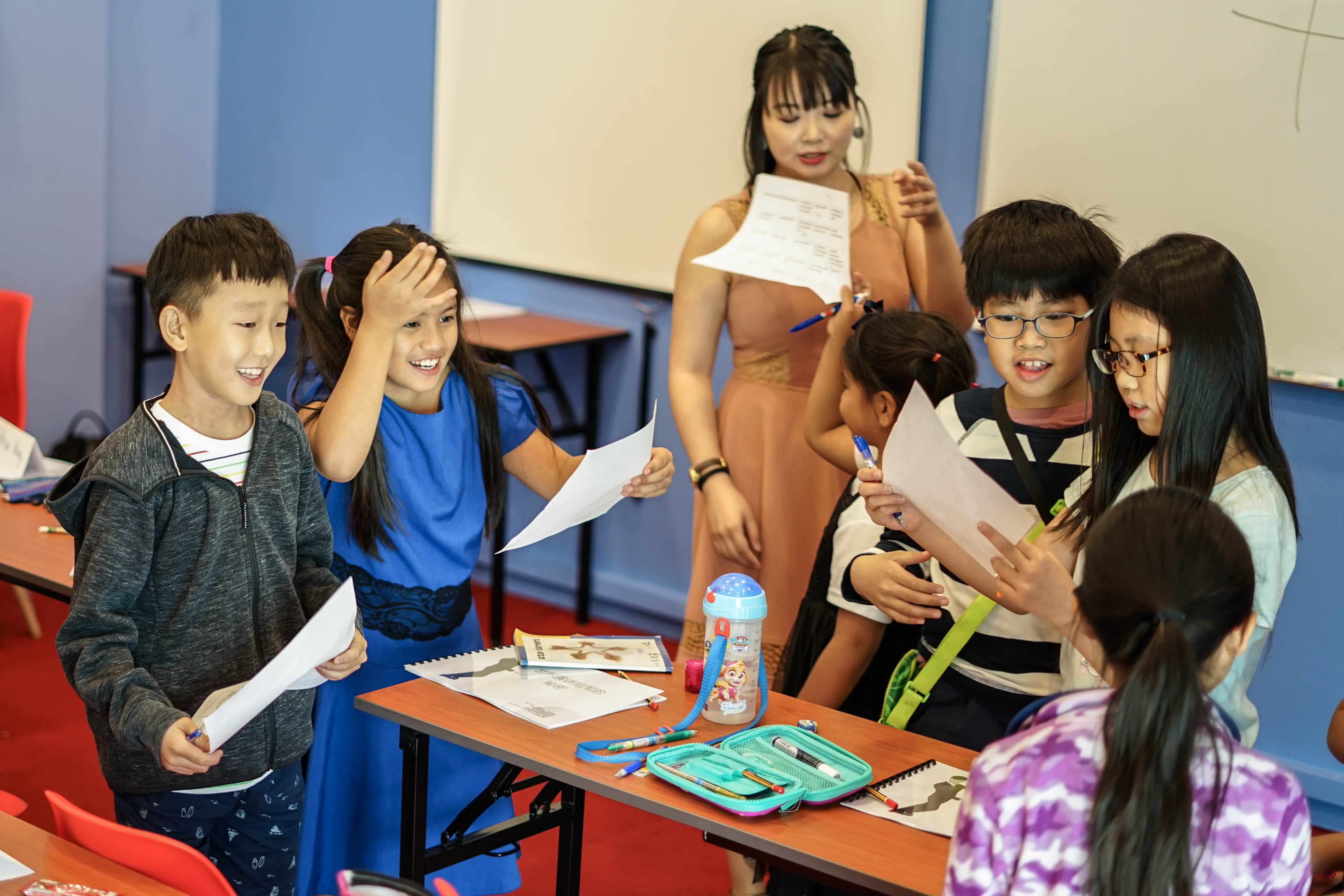
You do not necessarily need to announce:
“IT IS 7.30 PM. PSLE ORAL PRACTICE COMMENCES NOW.”
Ordinary family conversations can provide surprisingly useful practice.
At dinner, ask:
“What was the most interesting thing that happened in school today?”
Then:
“Why?”
If something interesting happens while you're outside:
“What would you have done differently?”
If your child expresses an opinion:
“Why do you think that?”
“Can you give me an example?”
“Has that ever happened to you?”
The goal is not to interrogate the child.
It is to make forming an opinion, explaining it and responding to follow-up questions increasingly normal.
This complements the home exercises we previously discussed for helping children become more comfortable thinking and speaking on the spot.
Recording Reading Aloud Can Reveal Blind Spots
For Reading Aloud, Darren also recommends occasionally recording a short passage.
A child may genuinely not realise:
“I'm rushing.”
“I'm swallowing the ends of certain words.”
“I'm much softer than I thought.”
Listening to the recording provides another perspective.
This is one reason video and audio feedback feature regularly in public-speaking training: sometimes the most useful feedback is allowing students to hear or see what everyone else is already hearing or seeing.
But home practice does not need to become constant correction.
Which brings us to an important warning.
Don't Correct Every Sentence Your Child Says
Imagine trying to formulate an unfamiliar answer while someone beside you is constantly waiting to correct you.
Wrong word.
Try again.
Grammar.
Try again.
Better phrase.
Start over.
After enough of that, a child may become more concerned about avoiding mistakes than communicating an idea.
Darren therefore advises parents not to correct every sentence or continually supply the “better” answer.
This connects with another principle from his coaching:
“There is a time for correction and a time for expression.”
Let the child finish the thought.
Then choose the most useful thing to work on.
The weeks before PSLE Oral should increase familiarity and confidence, not make the child feel that every conversation at home has suddenly become another examination.
PSLE Oral Preparation Should Develop Adaptability, Not Dependency
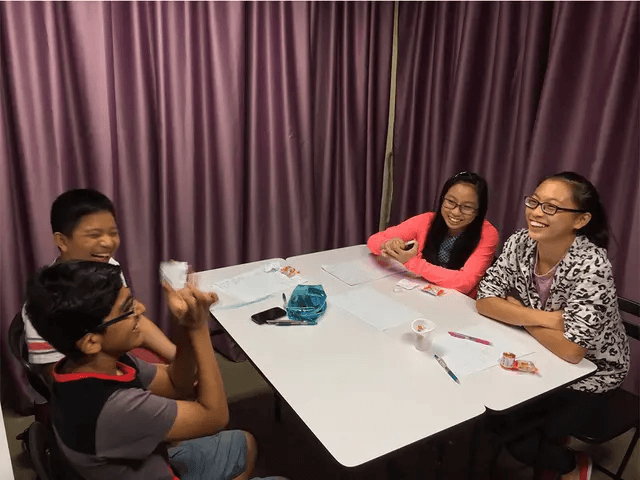
There is a broader reason all of this matters.
PSLE Oral is an examination.
But the underlying skills extend far beyond Primary 6.
Listening carefully.
Thinking before responding.
Explaining an opinion.
Using a personal experience to illustrate an idea.
Speaking clearly.
Responding to an unexpected question.
Recovering when you momentarily don't know what to say.
These same abilities eventually appear in:
classroom discussions;
presentations;
interviews;
leadership opportunities;
competitions;
group discussions;
and ordinary conversations.
For a child who is generally uncomfortable speaking in front of others, the issue may also extend beyond examination technique. In that situation, parents may find our guide on helping a shy child become more confident in public speaking useful.
Darren Tay's Final 5-Minute PSLE Oral Checklist
What should a Primary 6 student remember immediately before walking into the examination?
Not twenty techniques.
Not an entire notebook of model answers.
Darren would keep it simple:
1. Sit upright.
Give yourself an appropriate physical foundation for speaking.
2. Speak clearly at a comfortable pace.
Do not mistake speed for fluency.
3. During Reading Aloud, focus on meaning.
Use punctuation to help guide pauses and allow meaning to guide emphasis.
4. Listen to the entire conversation question.
Do not start constructing the answer halfway through the examiner's sentence.
5. Give yourself permission to think.
A short pause is better than panicking because you believe you must speak instantly.
6. Begin with one relevant idea.
It doesn't have to be the world's most brilliant opening sentence.
7. Develop your answer using genuine experiences and examples where appropriate.
Let the examiner understand not only what you think, but why.
And finally:
Don't enter the examination trying to reproduce the “perfect answer”.
As Darren tells students:
“Enter ready to listen, think and have a conversation.”
Public Speaking Training for Primary School Students in Singapore
PSLE Oral preparation can certainly focus on examination-specific practice.
But if your child struggles more broadly with speaking confidence, vocal delivery, organising ideas or answering unexpected questions, those underlying communication skills can also be developed progressively over time.
At Public Speaking Academy, our weekly Speech Excellence Programme for children and teenagers includes areas such as speech delivery, impromptu speaking, oral communication, interviews, storytelling and persuasive speaking, alongside repeated opportunities to present and receive feedback.
For children aged 9–18 who prefer an intensive introduction during the school holidays, our 2-Day S'Peak Performance Kids Programme includes hands-on work in areas such as presentation skills, impromptu speaking, oral communication and confident delivery.
The purpose is not simply to teach children a collection of impressive phrases.
It is to help them become increasingly capable of thinking, organising and communicating for themselves.
Frequently Asked Questions About PSLE English Oral
How many marks is PSLE English Oral worth in 2026?
Under the official 2026 SEAB English Language syllabus, Oral Communication is worth 40 marks and 20% of the overall PSLE English examination. Reading Aloud carries 15 marks and Stimulus-Based Conversation carries 25 marks.
How long is the PSLE English Oral examination?
The official syllabus provides 5 minutes of preparation time followed by approximately 5 minutes of examination time.
Should my child memorise model answers for PSLE Oral?
Memorising entire responses can make it harder for a child to adapt when questions are phrased differently or followed by unexpected prompts. SEAB states that students are not expected to reproduce pre-prepared responses. Instead, children can prepare by practising how to develop ideas, discussing different themes, building a bank of genuine experiences, expanding vocabulary and becoming comfortable answering unexpected questions.
What should my child do if their mind goes blank during PSLE Oral?
A brief pause does not mean the child has failed. Darren recommends processing the question first, finding one simple relevant idea and, where appropriate, searching for a genuine personal experience connected to the topic. This skill becomes easier when unexpected questions are practised beforehand.
How can parents help their child practise PSLE Oral at home?
Parents can create everyday opportunities for children to express and explain opinions, ask natural follow-up questions such as “Why?” and “Can you give me an example?”, and occasionally record Reading Aloud practice so children can hear their own pace, clarity and projection. Avoid turning every conversation into a correction exercise.
About Darren Tay
Darren Tay is the Founder and Master Trainer of Public Speaking Academy and the 2016 World Champion of Public Speaking.
His training work spans children, teenagers and working professionals, with a focus on helping speakers develop practical communication skills through structured techniques, speaking practice and feedback.
For Darren, effective PSLE Oral preparation ultimately comes back to a principle much bigger than any one examination:
Prepare the child to communicate — not merely to recite.